
Cinestill 800T
The images below were shot on the Olympus 35DC (roll 16).
I will speak more about my experience down below…






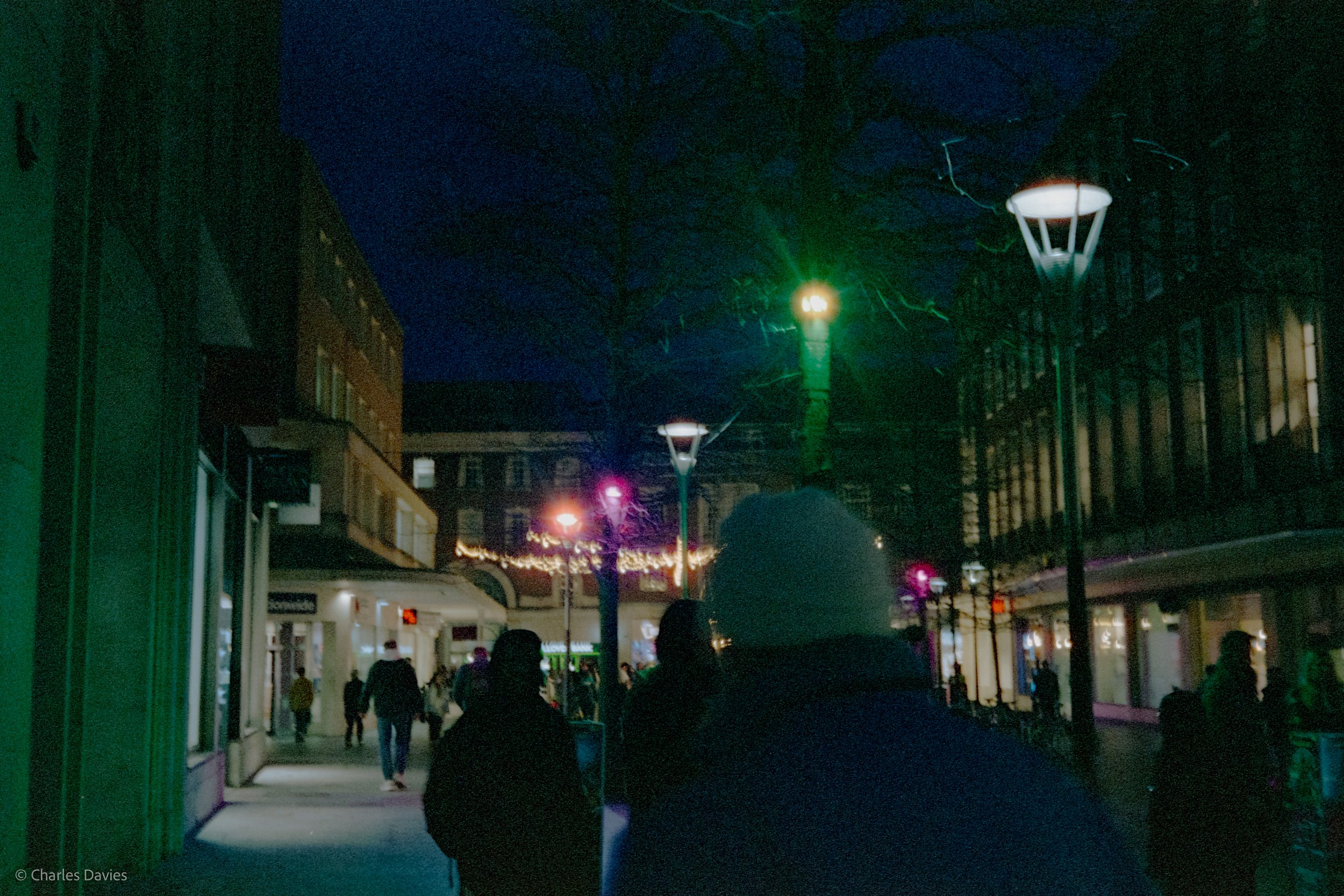












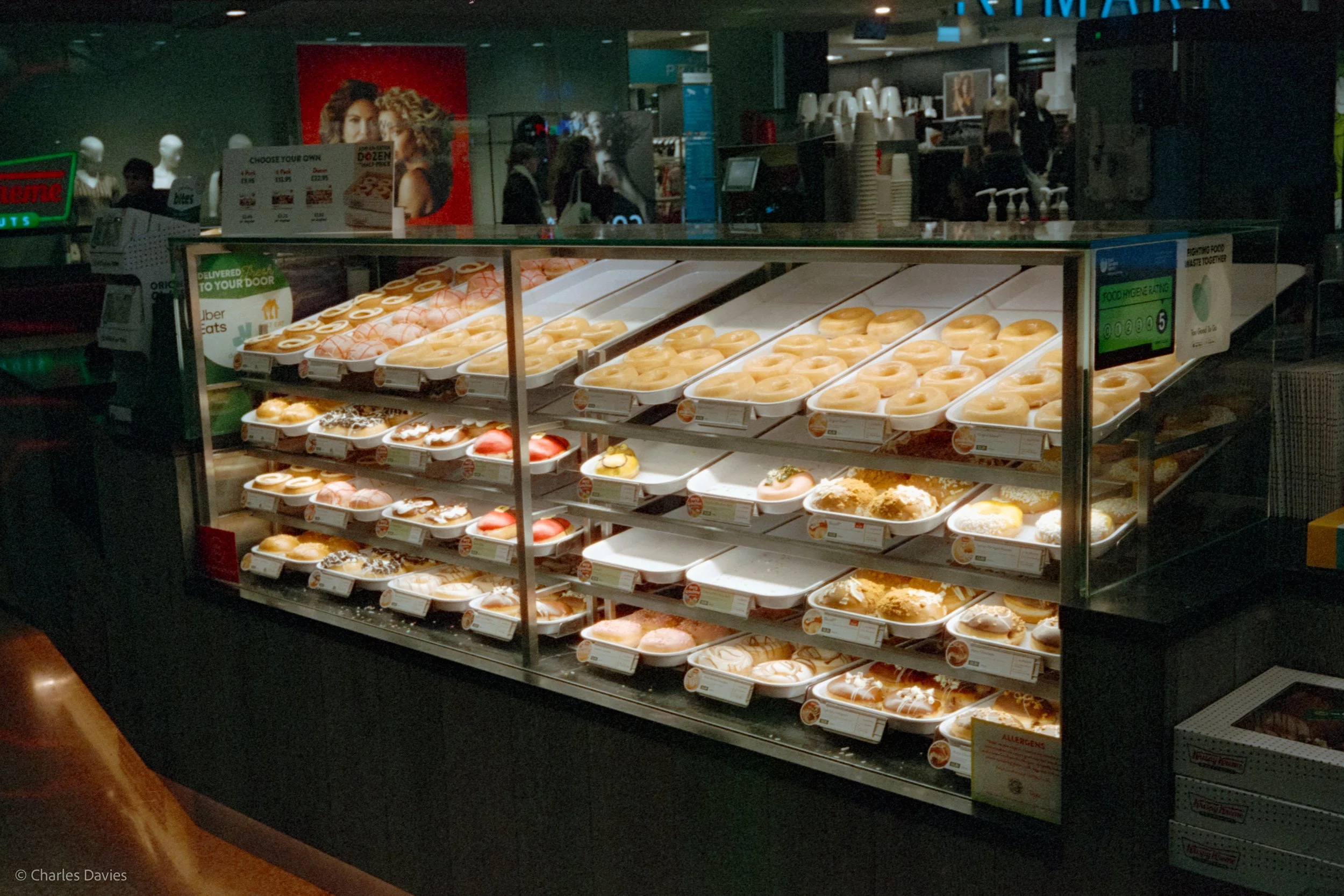





So it was Christmas time. What better Film Stock to shoot the Christmas market with than Cinestill 800T? This was also my first time shooting this and I wanted to capture the bright lights of the city and the market. I shot this roll in both Exeter and at home. I had heard before shooting this that it likes overexposure quite a lot and so I set my Olympus to ISO 500 and I went out shooting. Sadly a lot of the images were still underexposed.Regardless of this error, Cinestill 800T is a wonderful film stock that delivers beautiful results. Cinestill is technically re-spooled and repackaged Kodak Vision 3 500T sold at a premium and it Is very overpriced. I’ll get on to why in a moment. the “T” in this film stock actually stands for “Tungsten” as it is a tungsten balanced film primarily used for night shots because of well, tungsten lights. You may be wondering what is so special about Kodak Vision 3 and why people pay Cinestill for it even when it’s overpriced.That’s because Kodak Vison 3 is actually a motion picture film. Think of some Hollywood films such as The Dark Knight, Dunkirk, Once Upon a Time in Hollywood and even Oppenheimer. The list goes on. These movies were all originally shot on film such as this. Okay, maybe the reels of motion picture film are expensive and that’s why this single roll is also expensive. Well you would be wrong. The actual reels used to make the movies aren’t overly expensive. The problem actually lies in the film itself. Motion picture film like vision 3 has something called a Rem-jet layer. It’s this murky and horrible carbon based layer attached to the film. The rem-jet layer has it’s uses and one such use it’s avoidance of halation.The murky rem-jet layer (also called the anti-halation layer) basically is there for many uses but the one i’ll mention today is that it absorbs extra light that passes through the emulsion of the film. Without the remote layer, it causes these halos and glowing rings around highlights. If you look at the above images of the Christmas lights, you’ll see they have this halo effect around them. Because of the rem-jet layer of vision 3 film, you can’t get it processed at any lab. Non-Motion Picture Film (normal colour negative film) is a C-41 developmental process whereas motion picture film is an ECN-2 process. If I was shooting a normal roll of Kodak Vision 3 that I re-spooled myself, I would have to get it developed as motion picture film. This is where Cinestill comes in. They re-spooll and repackage the film themselves but they don’t just leave it at that. They go ahead and remove the rem-jet layer which means you can go ahead and develop motion picture film in any lab that does colour negative developing. That’s enough about this film stock but I thought you might find this interesting. Let’s go ahead with my thoughts on this roll. With the underexposure aside, I really quite like these images. The bright lights were captured. People are dressed in warm clothes and having a fun evening out at the Christmas market. If I used something like the Hasselblad X-Pan (which I don’t own sadly) I think these images would be even better. Regardless of this, I can’t wait to shoot this film again no matter if it’s from Cinestill, or another company.